Our story
The origin of Karate
Every framework starts with a problem. Ours started with a single test that wouldn't stop failing.
Chapter 1: The broken test
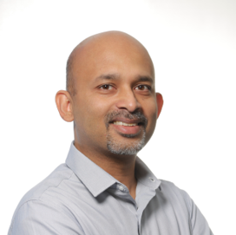
Peter Thomas was leading the API platform team at Intuit, overseeing 15 services for the company's core accounting product. One afternoon, a production release was blocked by an unstable Java-based integration test that kept failing for no obvious reason. The test sprawled across multiple files. It was written by someone who'd long since moved on. And despite Peter's 18+ years of Java experience, it was nearly impossible to read.
Peter spent hours debugging it. What he kept running into wasn't a bug in the code: it was an impedance mismatch. Java, for all its power, was never designed to work with JSON. Every assertion required serialization boilerplate. Every path traversal needed helper classes. The test was fighting the language it was written in.
"JavaScript is far more effective than Java when it comes to working with JSON."
Peter Thomas, December 2016
So Peter did what engineers do when they hit a wall: he built something new. Over the next few weeks, he prototyped a small interpreter that could parse human-readable commands and turn them into HTTP calls, JSON assertions, and XML operations. No Java helpers. No serialization dance. Just the intent, expressed directly.
Chapter 2: Bare hands
On February 9, 2017, Peter released the prototype as open-source software. He named it Karate, after the Japanese word meaning "bare hands": strength without tools. The philosophy was in the name: keep things simple. Keep humans in charge. Don't hide behind layers.
The launch landed harder than Peter expected. Test-automation evangelist Joe Colantonio recorded a YouTube walkthrough calling it "awesome" and highlighting how fast you could go from zero to a running test. The video caught fire. GitHub stars climbed. Questions started arriving on Stack Overflow faster than Peter could answer them.
Within months, teams at companies Peter had never heard of were writing Karate tests in production. By the end of the first year, it was running in hundreds of CI pipelines. The framework that started as a weekend prototype was quietly becoming infrastructure.
"Karate means bare hands: strength without tools. That philosophy has stayed with us ever since."
Chapter 3: Building a company
By 2021, Karate was being downloaded over a million times a month. Over 400 companies had adopted it. Fortune 500 engineering teams were standardizing on it. And Peter, still maintaining the project largely on his own, was drowning in demand for features, support, and enterprise capabilities he had no time to build.
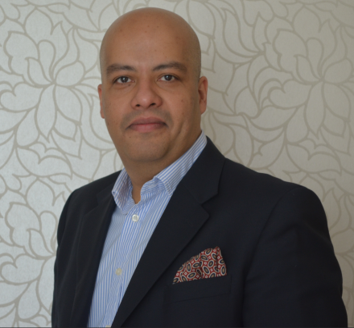
That's when Kapil Bakshi entered the picture. Kapil had spent 24 years building and running software businesses at Larsen & Toubro, Atos, and Infosys, growing multiple P&Ls past $100M ARR. He understood what Peter had built, and more importantly, what it would take to make it sustainable without compromising what made it special.
In November 2021, Peter and Kapil co-founded Karate Labs Inc. The premise was simple: everything that's in the open-source framework stays free, forever. Paid tiers unlock productivity features, IDE plugins, and enterprise capabilities, but the core framework is never paywalled. Y Combinator and Uncorrelated Ventures backed the vision shortly after.
Today, Karate Labs is a company. But the framework is still the same thing it was on day one: a simple way to test things, built by people who got tired of the complicated way.